
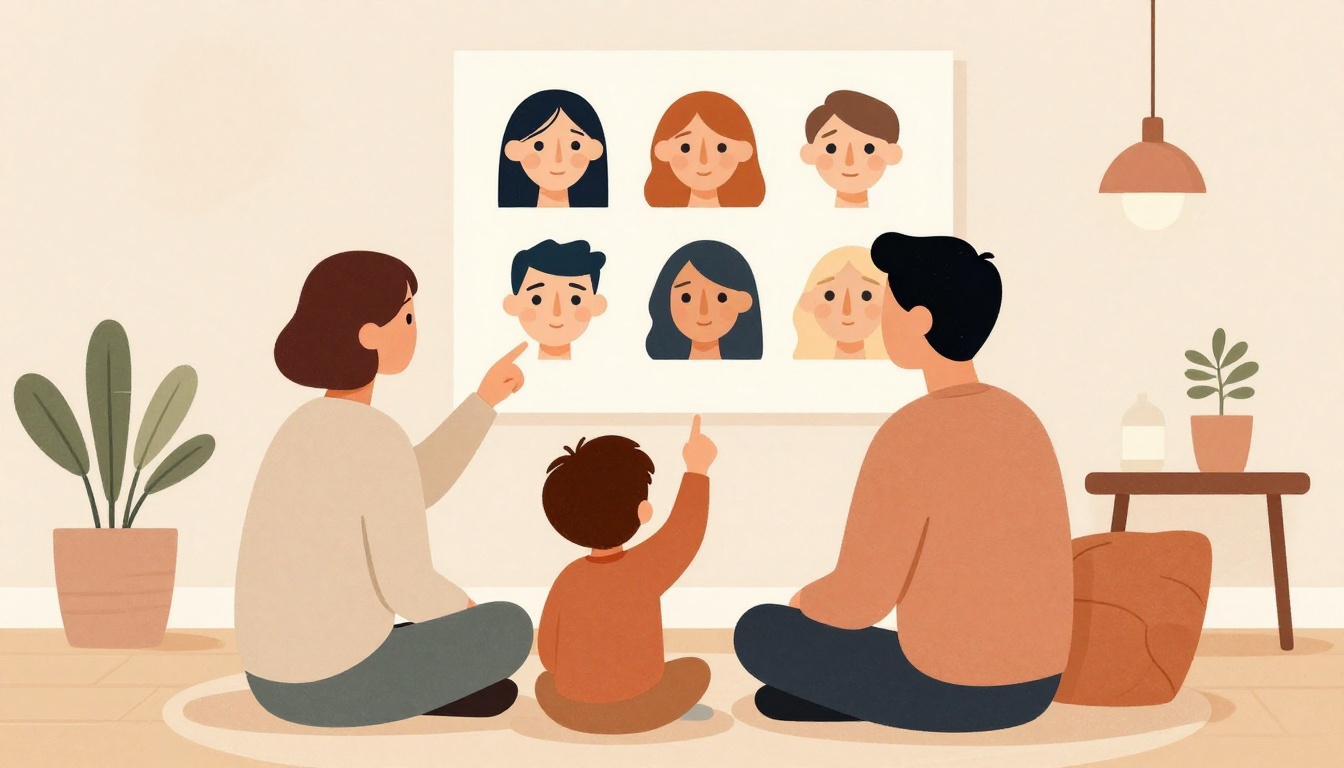
When your child is melting down, the last thing they can do is tell you exactly what’s wrong. Young children feel emotions as intensely as adults do, but they often lack the language to explain what’s happening inside. A feelings chart bridges that gap by giving kids a visual way to recognize and name their emotions—a first step toward emotional regulation and resilience.
What does the “name it to tame it” technique do in the brain?
Select one answer.
Why a feelings chart works
Feelings charts are visual tools that show faces or words for different emotions, helping children identify what they’re feeling by pointing to what they see. This simple act builds emotional awareness, expands vocabulary, and fosters empathy as kids learn that others experience a range of feelings too. According to the Kids Mental Health Foundation, children can start distinguishing major emotions like anger, fear, sadness, and happiness as early as 6 months old by watching faces and tone of voice. As they grow, they learn more subtle emotions like frustration or pride—and a chart helps them put words to those experiences.
The science backs this up: naming an emotion activates the prefrontal cortex, the brain’s reasoning center, which helps calm the amygdala, the alarm center. This “name it to tame it” technique, coined by Dr. Dan Siegel, shows that labeling a feeling reduces its intensity and helps a child settle. When you help your child name what they feel, you’re not fixing the emotion—you’re helping their brain come back online.
How to build your family feelings chart
Creating a chart together makes it more meaningful and gives your child ownership. Here’s a step-by-step guide:
- Choose your emotions. Start with 4–6 core feelings: happy, sad, angry, scared, calm, and excited. For older kids, add more nuanced ones like frustrated, disappointed, or proud. The Access and Inclusion Model offers a chart with 16 emotions, but you can tailor yours to your child’s age.
- Pick a format. Use photos of your child’s own face, draw simple faces, or use emojis. The goal is that your child can easily point to what they feel. You can also use a color wheel like the Feeling Wheel, which groups emotions by color to make them more concrete.
- Make it together. Let your child color, cut, or arrange the chart. This turns it into a do-together activity that builds engagement.
- Hang it where you’ll see it. Place it on the fridge, in a calm-down corner, or by the bed. The key is to make it part of your everyday environment, not just a tool for crisis moments.
- Introduce it during calm times. Don’t wait for a meltdown. Point to each face and talk about what it means. Model using it yourself: “I’m feeling frustrated, so I’m going to point to that face and take a deep breath.”
Using the chart in daily life
A feelings chart works best when it’s woven into your routine. Check in twice a day—morning and bedtime—by asking, “How are you feeling right now?” and letting your child point. This builds self-awareness and normalizes talking about emotions. When a big feeling arises, gently ask, “Can you show me on the chart what you’re feeling?” This simple question gives your child permission to pause and check in with themselves.
Validate their choice. If they point to “angry,” respond with empathy: “I see you’re angry. That’s a big feeling.” Avoid saying “calm down” or “you’re fine,” which tells a child their experience is wrong. Instead, name the feeling and offer a coping strategy, like taking three deep breaths together.
Expanding beyond the basics
As your child grows, you can add more emotions and even create a “feelings meter” to gauge intensity. You can also use the chart to discuss characters in books or movies: “How do you think that character feels?” This builds empathy and helps your child understand that emotions are universal. The Lotus Bloom Psychology guide notes that using a chart consistently helps children develop emotional intelligence, improve communication, and strengthen self-regulation—skills that support lifelong mental health.
Remember, the goal isn’t to eliminate big feelings—it’s to help your child understand and manage them. A feelings chart is a simple, practical tool that turns emotional moments into opportunities for connection and growth.
How the Featured Expert Can Help
If your family needs extra support navigating anxiety, behavior, or communication, The SEL Supply Co offers personalized social and emotional support for families. They start with a free 15-minute consultation to see if you’re a good fit, then create customized plans tailored to your child’s unique needs. Their services include small groups, parent webinars, and school consultations, all available on an hourly basis. Visit The SEL Supply Co to book a session or learn more.
Quiz: Test your knowledge
What does the “name it to tame it” technique do in the brain?
- It activates the prefrontal cortex and calms the amygdala.
- It increases activity in the amygdala to process emotions.
- It bypasses the brain and works only on behavior.
Correct answer: It activates the prefrontal cortex and calms the amygdala.