
What is a calm-down corner primarily designed to be?
Select one answer.
Why your family needs a calm-down corner (and it's not a time-out)
When emotions spike at home, everyone needs a place to reset. A calm-down corner is a designated space where a child — or an adult — can go to regain emotional and physical control when feelings run high. It is not a punishment or a time-out; it is a favorable, non-punitive option that helps children develop emotional regulation, provides structure, and leaves them feeling safe and secure, according to Developmental Pathways.
That distinction matters. If a corner feels like banishment, kids avoid it. If it feels like a tool they choose, they use it. The goal is to normalize calming as a routine part of family life, not a consequence for misbehavior.
What a calm-down corner actually does for kids
A calming corner is a quiet place with soft seating and calming tools where kids can cool off when they feel upset or overwhelmed, explains Brown University Health. The benefits stack up quickly:
- Builds emotional intelligence — the ability to recognize, understand, and manage emotions, and to respond to the feelings of others.
- Teaches mindfulness — breathing, reading, or stretching gives kids a concrete way to self-soothe.
- Provides a safe space to manage big emotions like sadness, anger, or frustration.
- Encourages independence — the child chooses to use it, which builds self-regulation over time.
Children who can self-regulate are more likely to have positive social relationships, do well in school, and cope with challenges, notes the Children's Home Society of California.
Why the whole family should use it
Adults get overwhelmed too. When a parent models using the corner — stepping away to breathe before responding — it destigmatizes the space and shows kids that regulation is a lifelong skill, not a kid-only rule. A family corner works best when everyone has permission to use it.
How to build your calm-down corner: a step-by-step checklist
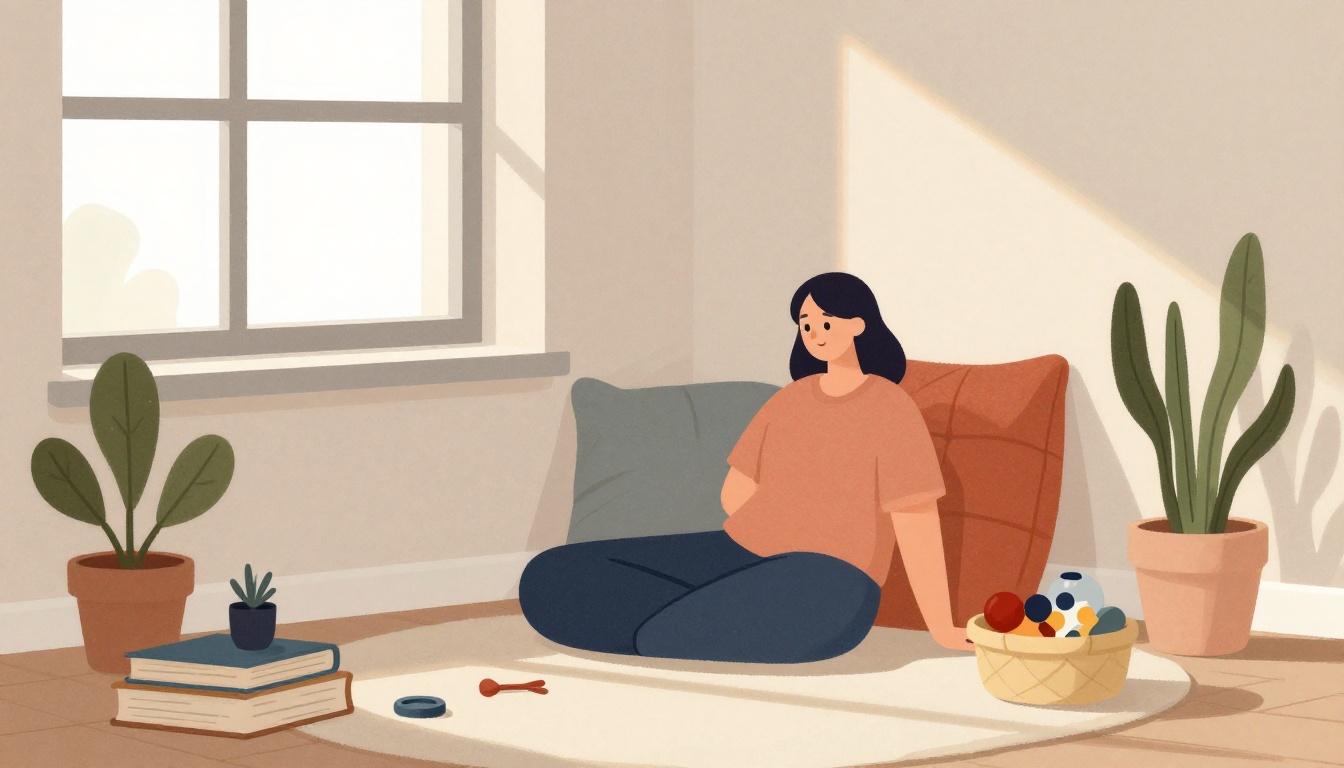
- Pick a low-traffic spot. A corner of a bedroom, a nook in the living room, or a quiet hallway works. It should be visible enough to feel safe but separate enough to feel calm.
- Add soft seating. A bean bag, floor pillow, small chair, or even a pillowcase stuffed with soft toys gives the body something comforting to land on.
- Include sensory tools. Weighted blankets or cushions, headphones, fidget toys, pop-its, putty, puzzles, snow globes, or a calm-down jar all help.
- Add visual calming supports. A simple breathing-exercise card, a feelings chart, or a small mirror helps kids name what they feel.
- Stock a few books. Picture books about feelings give younger kids a script for what's happening inside them.
- Keep it uncluttered. Too many options overwhelm a dysregulated brain. Rotate tools every few weeks.
- Teach it before you need it. Practice using the corner during calm moments so the skill is ready when emotions spike.
Rules that keep it positive
- The corner is a choice, never a sentence.
- No lectures inside the corner. Give space.
- Anyone in the family can use it, including adults.
- After a reset, reconnect — a hug, a short check-in, or a simple "I'm glad you took care of yourself."
Common mistakes to avoid
Sending a child there mid-meltdown as a punishment defeats the purpose. So does filling it with screens, which distract rather than regulate. And skipping the teaching phase — kids need to see and practice the tools before they can reach for them under stress.
How the Featured Expert Can Help
If your family needs more personalized support building regulation routines, The SEL Supply Co offers personalized social and emotional support for families. They start with a free 15-minute consultation, then create customized plans focused on areas like anxiety, routines, behavior, impulse control, and communication. Sessions are billed hourly, and they also offer small groups, parent webinars, and school consultation. You can book directly at theselsupply.com.
Quick quiz: test your calm-down corner knowledge
Before you build, check your understanding of what a calm-down corner is — and isn't.