
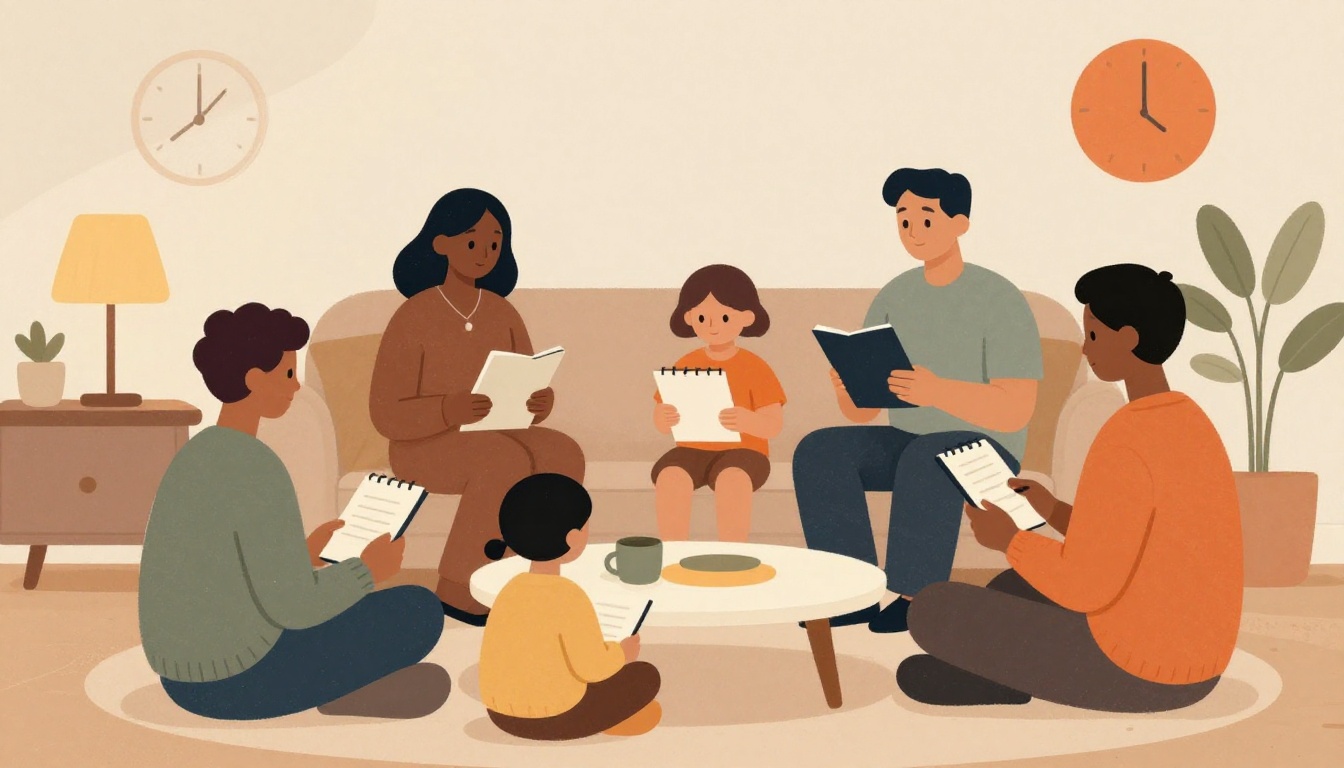
Does the idea of a family meeting make your kids groan and your partner sigh? You're not alone. Many parents picture a formal, tense gathering that feels more like a lecture than a conversation. But when done right, a family meeting can become a highlight of your week—a time to connect, solve problems together, and build a stronger family culture. The key is to structure it for fun and engagement, not just business.
What is the recommended frequency and duration for effective family meetings?
Select one answer.
Start with the right mindset and structure
Think of a family meeting as "time you schedule just for your family to communicate and strengthen your family bonds," not a corporate boardroom session. The goal is connection, not control. According to the Connected Families framework, effective meetings help you coordinate plans, discuss challenges, grow responsibility, and develop a shared vision for your family's purpose.
Set a regular time and stick to it. Positive Discipline recommends meeting once a week for 15 to 30 minutes, even if you don't finish everything on the agenda. Consistency helps children anticipate and value this special time. Choose a location that's comfortable and free from distractions—a cozy corner of the living room works better than the kitchen table where you usually have serious talks.
Create a simple, engaging agenda
An agenda keeps the meeting focused and gives everyone a chance to contribute. HPRC suggests setting a specific time and location, establishing an agenda, and rotating responsibilities. Here's a simple structure that works for all ages:
- Compliments and appreciations – Start by having each person share one thing they appreciate about each other family member. This sets a positive tone and builds connection.
- Calendar check-in – Review upcoming events, activities, and schedules so everyone knows what's happening.
- Problem-solving – Pick one or two items from a family "agenda" that anyone can add to during the week. Focus on solutions, not blame.
- Fun activity – End with something enjoyable, like a quick game, a story, or planning a special outing.
Encourage kids to help create the agenda and even lead parts of the meeting. Abacus Planning Group notes that asking different family members to lead portions increases participation and energy. For younger children, keep it short and playful—maybe 10 minutes. For teens, let them set the agenda and choose the fun activity.
Make it fun with these engagement ideas
A family meeting doesn't have to be all serious talk. Injecting fun keeps everyone engaged and looking forward to the next one. Here are some ideas:
- Storytelling circle: Have each person share a highlight from their week or a funny memory. This builds listening skills and empathy.
- Gratitude round: Go around and share one thing you're grateful for. This simple practice boosts positivity and emotional awareness.
- Game time: End with a quick board game, a card game, or a silly challenge. Nurturing Parenting suggests classic games like Uno or Jenga for easy rules and fun banter.
- Theme nights: Occasionally, make the meeting themed—like "Pizza Planning Night" where you decide the week's meals together, or "Dream Vacation Night" where you brainstorm future trips.
Establish ground rules that everyone agrees on
Ground rules create a safe space for sharing. Living Montessori suggests discussing simple rules like listening when others speak, no interrupting, and using respectful language. Encourage children to help create these rules—they're more likely to follow them if they have a say.
Write the rules down and post them where everyone can see. At the start of each meeting, remind everyone of the ground rules. This builds trust and helps family members feel comfortable sharing their thoughts openly.
Overcome common hurdles
Even with the best structure, you'll hit bumps. Here's how to handle them:
- Kids resist: If your kids complain, shorten the meeting to 15 minutes and make it more fun. Ask them what would make it better.
- Young children disrupt: For kids under four, it's okay to have the meeting while they're asleep or occupied with a quiet activity. They may not be developmentally ready to participate fully.
- Sensitive topics: If a topic is emotionally charged, address it one-on-one before the meeting, or use the meeting to brainstorm solutions together without blame.
Make it a family tradition
Family meetings are more than just a way to organize schedules—they're a tool for building resilience and emotional health. By creating a regular, enjoyable gathering, you're teaching your children valuable skills like listening, problem-solving, and expressing appreciation. Over time, these meetings become a cherished family tradition that strengthens your bond and helps everyone feel heard and valued.
How the Featured Expert Can Help
If you're struggling to get your family meetings off the ground or need extra support with communication, anxiety, or behavior, The SEL Supply Co offers personalized social and emotional support for families. They start with a free 15-minute consultation to see if you're a good fit, then create customized plans tailored to your child's unique needs. Their services include small groups, parent webinars, and school consultation, all on an hourly basis. Visit their website to book a session and get the guidance your family needs to thrive.
Quiz: Test your knowledge
What is the recommended frequency and duration for effective family meetings?
- Weekly, 15-30 minutes
- Monthly, 1 hour
- Daily, 5 minutes
Correct answer: Weekly, 15-30 minutes (based on Positive Discipline's recommendation).