
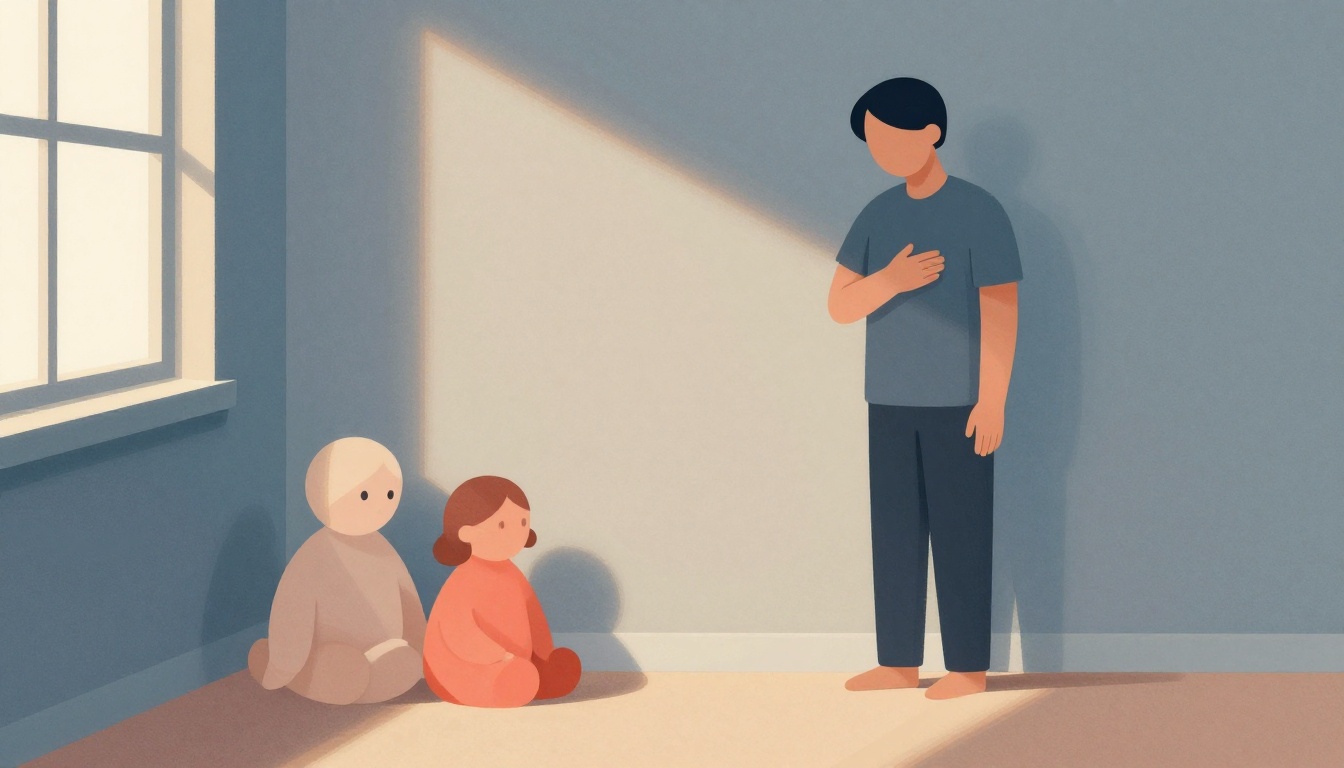
According to the research, what is the recommended first response when your children start bickering?
Select one answer.
Why sibling fighting hits you so hard
When your kids start bickering, your body reacts before your brain catches up. That's not a character flaw — it's a nervous system response. And the stress is real: research links sibling rivalry to maternal mental health strain, especially in high-stress family environments (Springer, 2026).
Here's the practical problem: if you're already flooded, you can't coach anyone. Your kids need you regulated before they can borrow your calm. So the first skill isn't managing them — it's managing you.
Step 1: Pause and assess before you move
Not every squabble needs you. Most sibling disagreements call for a "watch and wait" attitude, where you notice patterns in timing, topics, and triggers before stepping in (Rector Psychotherapy).
Use this quick triage:
- Level 1 — bickering: Whining, name-calling, "that's mine." Stay out unless it escalates.
- Level 2 — heating up: Voices rising, proximity increasing. Move closer, stay quiet.
- Level 3 — physical or frightening: Separate immediately and calmly. Safety first.
That assessment phase is a forced pause button — it moves you from reactive mode into a plan (Helping Families Thrive).
Step 2: Regulate yourself in under 60 seconds
You can't pour from an empty cup, and you can't de-escalate from a dysregulated state. Parents need to take care of themselves — exercise, sleep, food, and downtime are not luxuries (Child Mind Institute).
In the moment, try this:
- One breath. A single pause calms your system enough to collect your thoughts instead of unloading them.
- Name it silently. "I'm triggered, not in danger."
- Lower your voice. Speak quieter than they are. It forces them to listen.
- Unclench. Drop your shoulders, soften your jaw, open your hands.
If you're too activated to respond well, use a cool-off time for yourself first, then re-enter the situation (Center for Parenting Education).
Step 3: Use a neutral script that doesn't take sides
Assigning blame can feel productive, but it reinforces the competition that fuels rivalry (Bright Horizons). Resist declaring a "bad guy" and a "victim."
Try these instead:
- "Looks like something happened between you two. Let's figure this out together."
- "I'm here to help both of you. Who wants to tell me what happened first?"
- "I'm not deciding who's right. I'm helping you both find a way through."
This doesn't mean no consequences. It means you're there for all your children equally, which lets each one feel safe enough to take ownership (Dr. Siggie).
Step 4: Build a prevention routine
Reactive calm is good. Proactive calm is better. Sibling conflict is often driven by boredom, tiredness, overstimulation, jealousy, or frustration — so address the pinch points before they hit.
- Track triggers for one week. Note the time, topic, and who was involved.
- Front-load connection. Ten minutes of one-on-one attention per child reduces competition for your focus.
- Set clear expectations. State the house rules once, calmly, and repeat them without lectures.
- Catch the good stuff. Praise cooperation the moment you see it.
- Protect your own basics. Sleep, food, movement, and downtime are part of the parenting plan, not separate from it.
When to get extra support
Occasional squabbles are normal and even useful — they give kids practice managing frustration, negotiating, and repairing relationships. But repeated aggression, intimidation, or bullying where one child feels consistently powerless is different. Research has linked sibling aggression with poorer mental health, so it's worth taking seriously rather than dismissing it as "just siblings being siblings."
If you're noticing that pattern, or if your own stress is consistently spilling into how you respond, that's a signal to bring in outside support — not a sign you've failed.
How the Featured Expert Can Help
The SEL Supply Co provides personalized social and emotional support for families, offering free consultations and customized plans. They focus on areas such as anxiety, behavior, and communication, and operate on an hourly basis. You can book a free 15-minute consultation directly at theselsupply.com.
Quick quiz
Test what you've learned about staying calm during sibling conflict.
Question: According to the research, what is the recommended first response when your children start bickering?
- A) Step in immediately and assign blame to whoever started it
- B) Use a "watch and wait" approach and notice patterns before intervening
- C) Send both children to separate rooms right away
Answer: B — Most sibling disagreements call for a "watch and wait" attitude, where parents pay attention to patterns in timing, topics, and other influences before deciding whether to step in.