
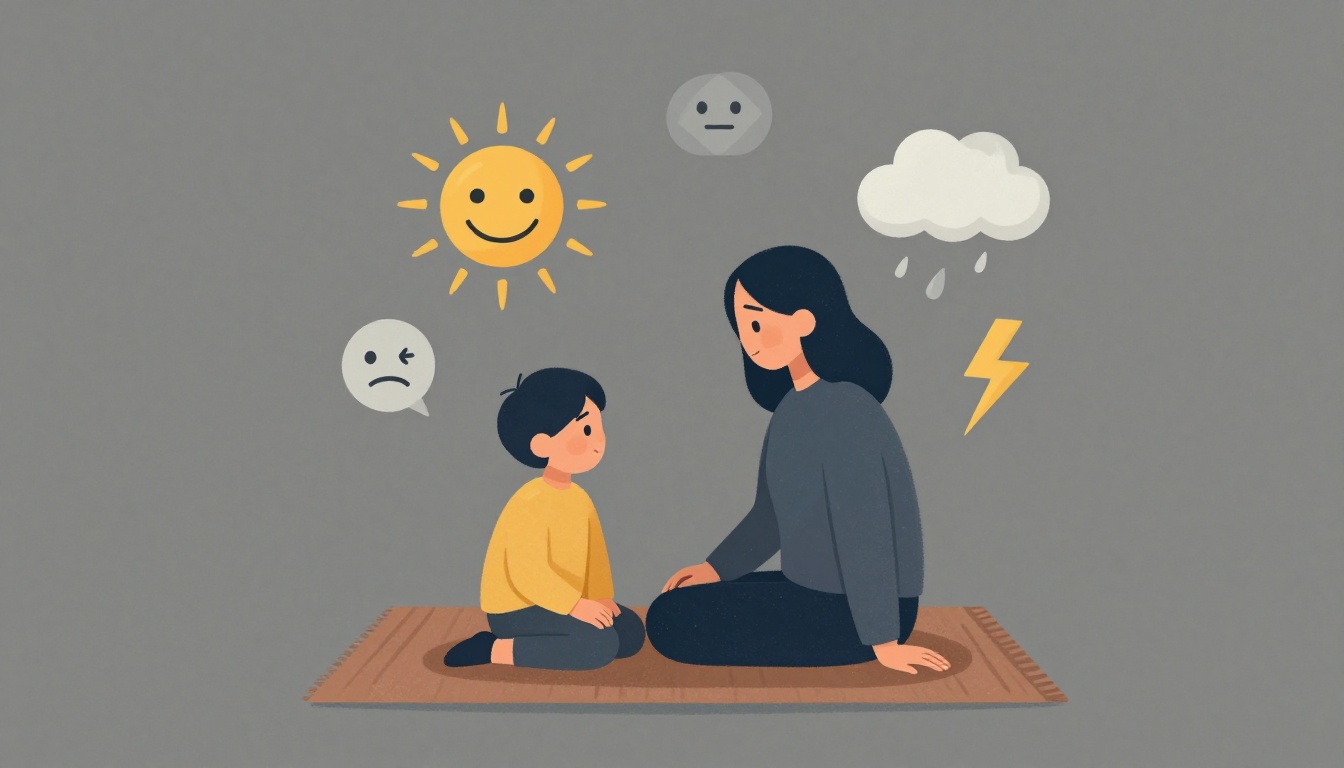
When your child screams instead of saying "I'm frustrated," or shoves a sibling instead of explaining "I feel left out," the missing piece is often not behavior—it's vocabulary. A larger and more complex emotional vocabulary helps children identify their feelings unambiguously, which reduces acting out and builds self-awareness. The good news: you don't need a psychology degree to teach this. You just need a simple, consistent process. Here's a step-by-step guide to help your child name emotions—starting today.
Which of the following is a research-backed way to help children build emotional vocabulary?
Select one answer.
Why emotional vocabulary matters
Children who can label emotions like "happy" or "sad" get along better with peers, self-soothe after negative events, and thrive at school, according to research highlighted by the Society for Research in Child Development. When kids can articulate frustrations, they are less likely to act out physically or disruptively, notes the Center for Resilient Children. In short, naming emotions is the first step toward managing them.
Step 1: Start with your own labeling
Children learn emotion labels largely from caregiver speech. A Princeton University study found that children are more likely to know an emotion label when they hear it used in context by parents. So narrate your own feelings out loud: "I'm feeling frustrated because the traffic is slow," or "I'm excited about our picnic." Don't shy away from complex words like "disappointed" or "overwhelmed"—kids can learn them faster than you think.
Step 2: Use books and media as emotion labs
Shared book reading is a proven way to boost preschool emotional vocabulary. A 2024 study in Vocabulary Learning and Instruction showed that 4-year-olds increased their ability to identify emotion words after a book-reading intervention. While reading any story, pause and ask: "How do you think this character feels? How can you tell?" Do the same during movies or TV shows. This turns passive screen time into an active emotional learning session.
Step 3: Play emotion games
Games make practice fun and low-pressure. Try these:
- Feelings charades: Write emotion words on cards; act them out without speaking.
- Feeling dice: Roll a die with emotion faces; ask your child to name the feeling and recall a time they felt that way.
- Emotion snack time: Pull a feeling face and eat snack while showing that emotion—sad snack, happy snack, surprised snack.
- Puppet play: Use puppets to act out a situation (like one puppet taking a toy); ask your child to identify the puppets' feelings and what they should do next.
These activities come from the Center for Early Childhood Mental Health Consultation and Brookes Publishing, and they work at home or in the classroom.
Step 4: Use a feelings chart or wheel
Visual tools like emotion wheels, mood meters, or simple feeling charts expose kids to a range of emotions in a low-stakes way. Post one on the fridge. Each morning or evening, ask your child to point to how they feel. Over time, they'll move from "happy/sad/mad" to "content," "anxious," "proud," or "jealous."
Step 5: Validate and expand
When your child names an emotion, validate it: "You're feeling angry because your tower fell. That makes sense." Then expand with a related word: "It sounds like you're also frustrated—those are similar feelings." This helps them distinguish between subtle emotions like happiness, contentment, and pride, a skill that develops as children grow.
Step 6: Practice during calm moments
Don't wait for a meltdown to teach emotion words. Practice preventively—during neutral times like mealtime or car rides. Ask "What made you feel happy today?" or "What's something that made you feel frustrated?" This builds the vocabulary before big feelings hit, making it easier for your child to use words in the moment.
A quick checklist for today
- Say one of your own feelings out loud (e.g., "I'm nervous about my meeting")
- Read a book and ask how a character feels
- Play one round of feelings charades
- Point to a feelings chart and name three emotions
- Validate your child's emotion with a specific label
How the Featured Expert Can Help
If you're looking for personalized support to build your child's emotional vocabulary and manage anxiety, behavior, or communication challenges, The SEL Supply Co offers customized plans for families. They start with a free 15-minute consultation to see if you're a good fit, then work with you on an hourly basis—offering small groups, parent webinars, and school consultation services. Visit The SEL Supply Co to learn more and book a session.
Quiz: Test your knowledge
Which of the following is a research-backed way to help children build emotional vocabulary?
- A. Reading books together and discussing characters' feelings
- B. Avoiding complex emotion words until age 10
- C. Punishing children for not naming emotions
Correct answer: A. Shared book reading has been shown to increase preschool children's emotional vocabulary, according to a 2024 study in Vocabulary Learning and Instruction.